

Geplaatst op 24 March 2025
A safe working environment is essential for continuity and growth. Therefore, incidents and emergencies must be avoided at all times. In sectors such as industry, manufacturing, and water treatment, explosion safety plays a crucial role in protecting employees and installations from the dangers of explosive atmospheres.
In environments where flammable gases or dust particles may be present, correct identification and marking of EX areas according to the ATEX directive is crucial. This is not only a matter of safety but also a legal requirement.
An EX area arises when a mixture of oxygen (from the ambient air) and a flammable substance (in the form of gas, vapor, mist, or dust) can ignite under atmospheric conditions. These areas require precise identification and marking. Examples include:
• Flammable gases (such as methane or hydrogen);
• Liquids with a low flash point (such as solvents and fuels);
• Airborne dust particles (such as grain or wood dust).
The presence of an ignition source in such an atmosphere can lead to an explosion. Therefore, correctly identifying and marking these areas is vital. This can be done using:
• EX area signage as part of composite signs;
• 2D overviews showing the top view of an EX area;
• 3D visuals showing detailed overviews of an EX area;
• Photo overviews showing detailed EX area zones;
• Physical barriers, such as posts and chains, if necessary.
According to the European ATEX 153 directive (previously ATEX 137), explosion safety signage is a mandatory part of the safety policy in potentially explosive environments. Depending on the situation and the required level of detail, an appropriate form of signage can be chosen.


Blomsma Signs & Safety provides effective and clear marking of EX areas through strategically placed EX area signage, safety symbols, and barriers. This is done following a structured signage plan with the following steps:
1. Audit and advice
A thorough inventory of the location to determine the required EX area signage and markings.
2. Signage plan
A plan in which the placement of EX area signage and boundaries is recorded, preferably based on the Explosion Protection Document (EVD).
3. Production and installation
Durable EX area signage is produced and installed, possibly supplemented with barrier posts and chains.
4. Maintenance and upkeep
Proper placement and periodic maintenance ensure that the signage continues to comply with current laws and regulations.
Blomsma Signs & Safety has supported various companies in implementing explosion safety in industry. The explosion risks outlined in the EVD are translated into effective signage. Examples include:

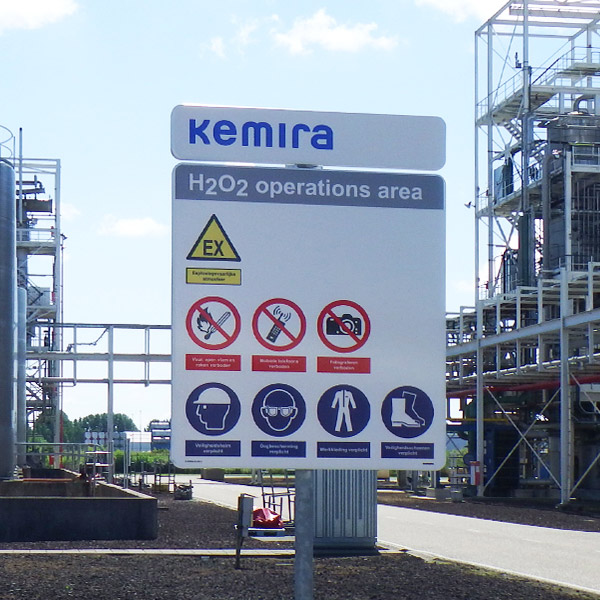
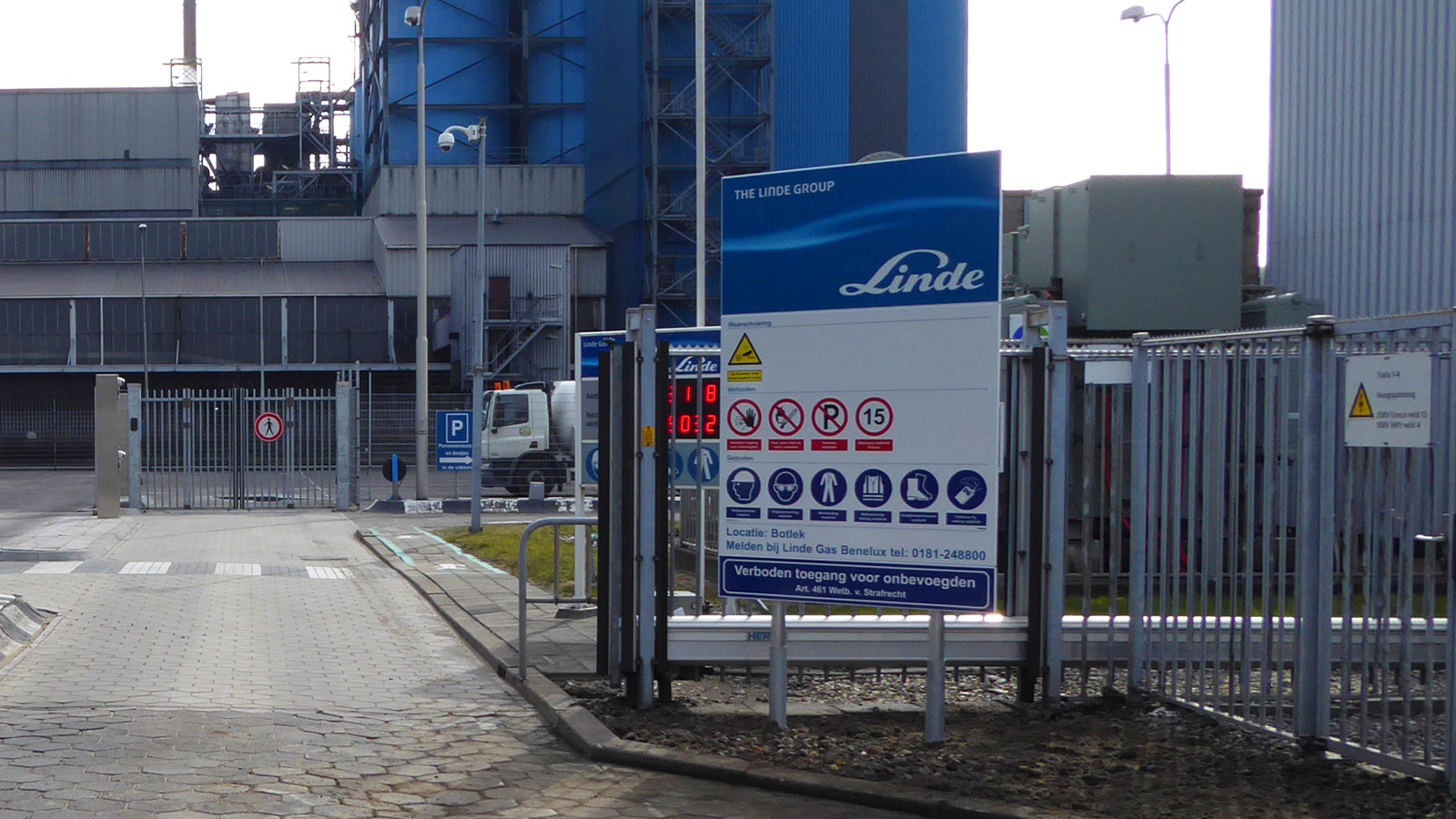
When an EX-zoned area is temporarily de-zoned (for example, during maintenance), this can also be indicated temporarily. This is done with the symbol ‘End of de-zoned area,’ for example as a (magnetic) interchangeable sign or folding board.
Do you want to ensure that your company complies with ATEX guidelines and creates a safe working environment in explosive hazardous areas? Blomsma Signs & Safety guides you from start to finish — from expert advice and well-thought-out design to professional installation and maintenance of EX area signage.
Contact us for more information or a non-binding consultation. Together, we ensure a safe and well-marked working environment!

Odfjell Terminals Rotterdam (OTR) has selected Blomsma Signs & Safety as partner for the implementation of a comprehensive safety signage system. OTR has the ambition to become a l ...
Having pipe marking done by experts like Blomsma Signs & Safety offers several advantages, especially when it comes to relieving your worries. ...

Blomsma Signs & Safety received the order from Eiffage Métal for the engineering, production and installation of a complete safety signage system for the topside of the Northland ...
Want to know more?
Contact us.
